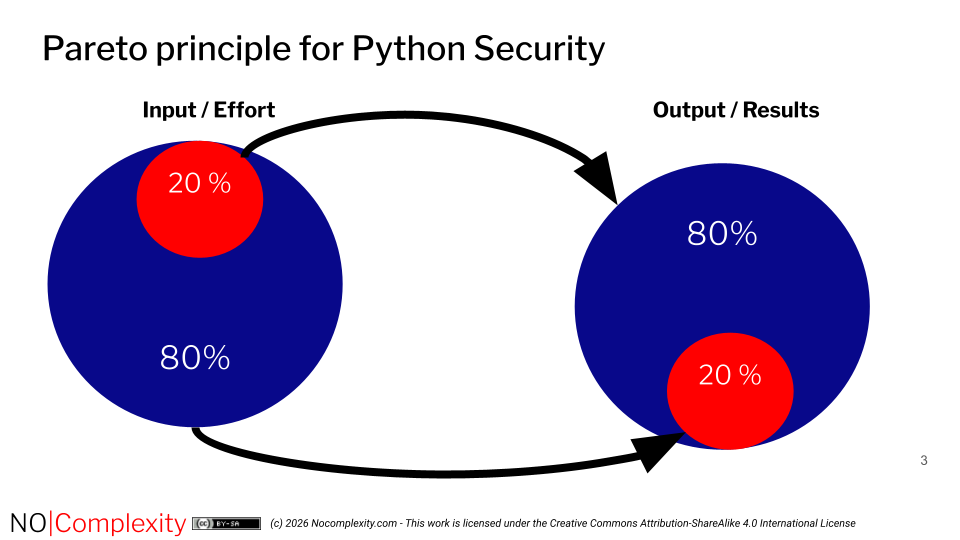
The Pareto principle, also known as the 80/20 rule, states that, for many outcomes, roughly 80% of consequences come from 20% of causes. This will mean for Cyber Security defects that 80% of the security breaches come from only 20% of all possible causes.
From a business perspective translating the 80/20 rule for cyber security testing would mean that 80% of security benefits can be achieved by focusing on 20% of the causes or efforts.
OWASP Top 10 is an excellent example that shows that of all possible security weaknesses only a small percentage still leads to the majority of security breaches. The OWASP Top 10 project analyses CVE and calculates an impact score.
Security Testing is complex and resources available are never endless. So security testing for Python should focus on:
Always perform a SAST test (Static Application Security Testing) on Python code before running. Despite complex dependency chains that are also possible for Python packages, a SAST test will give a quick view for security code aspects that deserve attention.
Validate if and how security by design is applied.
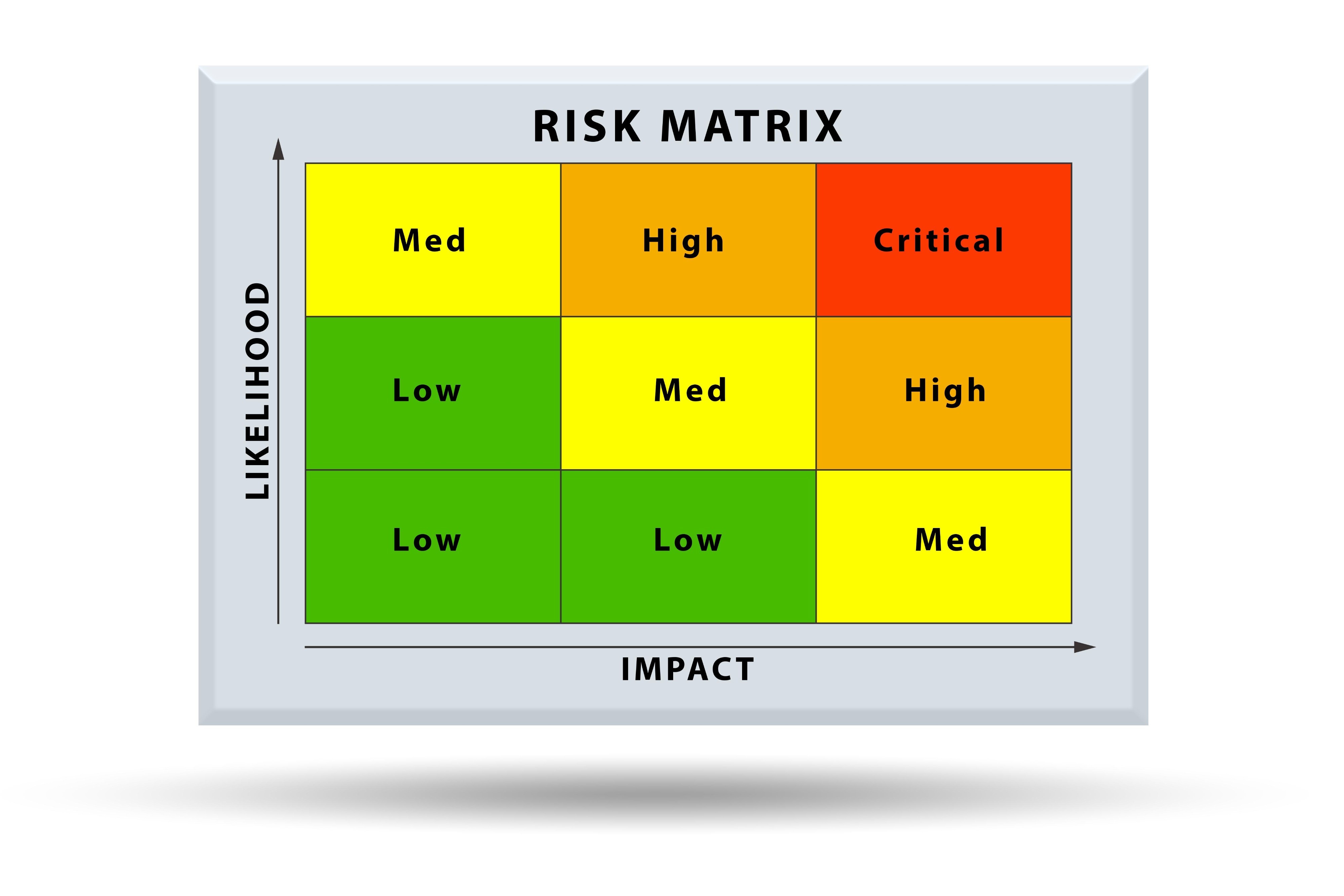
Ensure a threat model is created and that a risk-based approach is followed for all security test performed.
The threat model identifies the impact, while the risk-based approach determines the priority.