
Selecting a tool for security testing of Python code
In essence, the following security tests are commonly applied to Python code:
Secure design review: Focuses on implementation and design decisions, often combined with a secure code review using SAST tools.
Security Architecture Review:Evaluates the system architecture, including the context in which the system is developed, deployed, and maintained, from a security perspective.
The most reliable cybersecurity solutions are open and accessible to everyone. Good solutions are based on proven practices rather than hype.
Ultimately, the most effective way to ensure a Python program is secure is to validate both its design or architecture and its implementation.
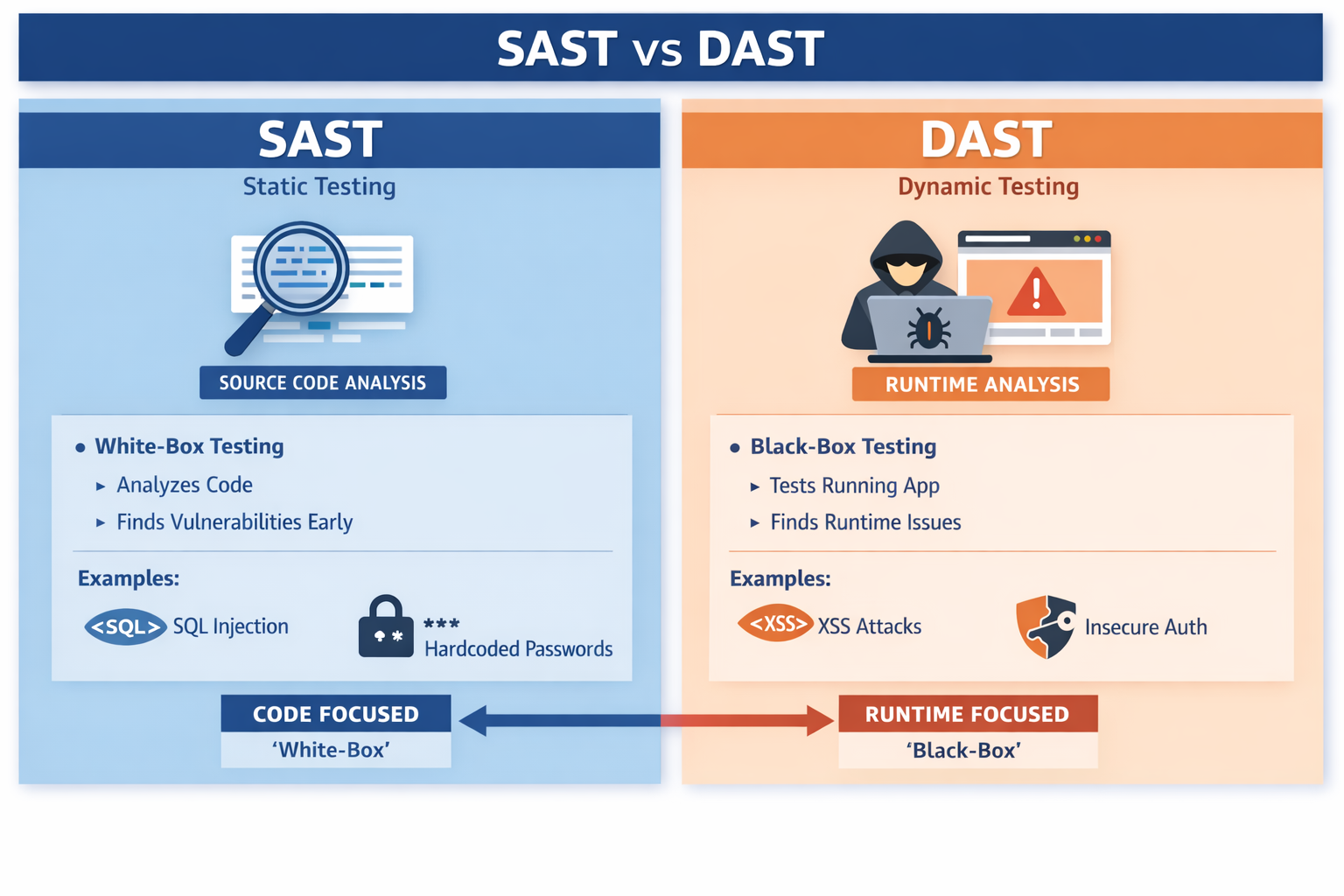
Static Application Security Testing (SAST)
Definition: SAST analyses source code, bytecode, or binaries without running the program.
Purpose: It detects vulnerabilities in the Python code itself, such as input validation issues, hard-coded secrets, or unsafe function usage.
How it works:
Scans the code for patterns known to be insecure.
Often integrated into development pipelines (CI/CD).
Example: Detecting Python calls that can cause security vulnerabilities in Python code before deployment.
Dynamic Application Security Testing (DAST)
Definition: DAST tests an Python application while it is running to identify security vulnerabilities.
Purpose: It simulates real-world attacks to check how the application behaves under malicious input or unexpected conditions.
How it works:
Sends test inputs or HTTP requests to the running application.
Monitors responses for signs of vulnerabilities like XSS, SQL injection, or authentication flaws.
Example: Testing a Python web application by sending malicious form inputs to check for cross-site scripting or insecure redirects.
Supply chain vulnerability checks (dependencies)
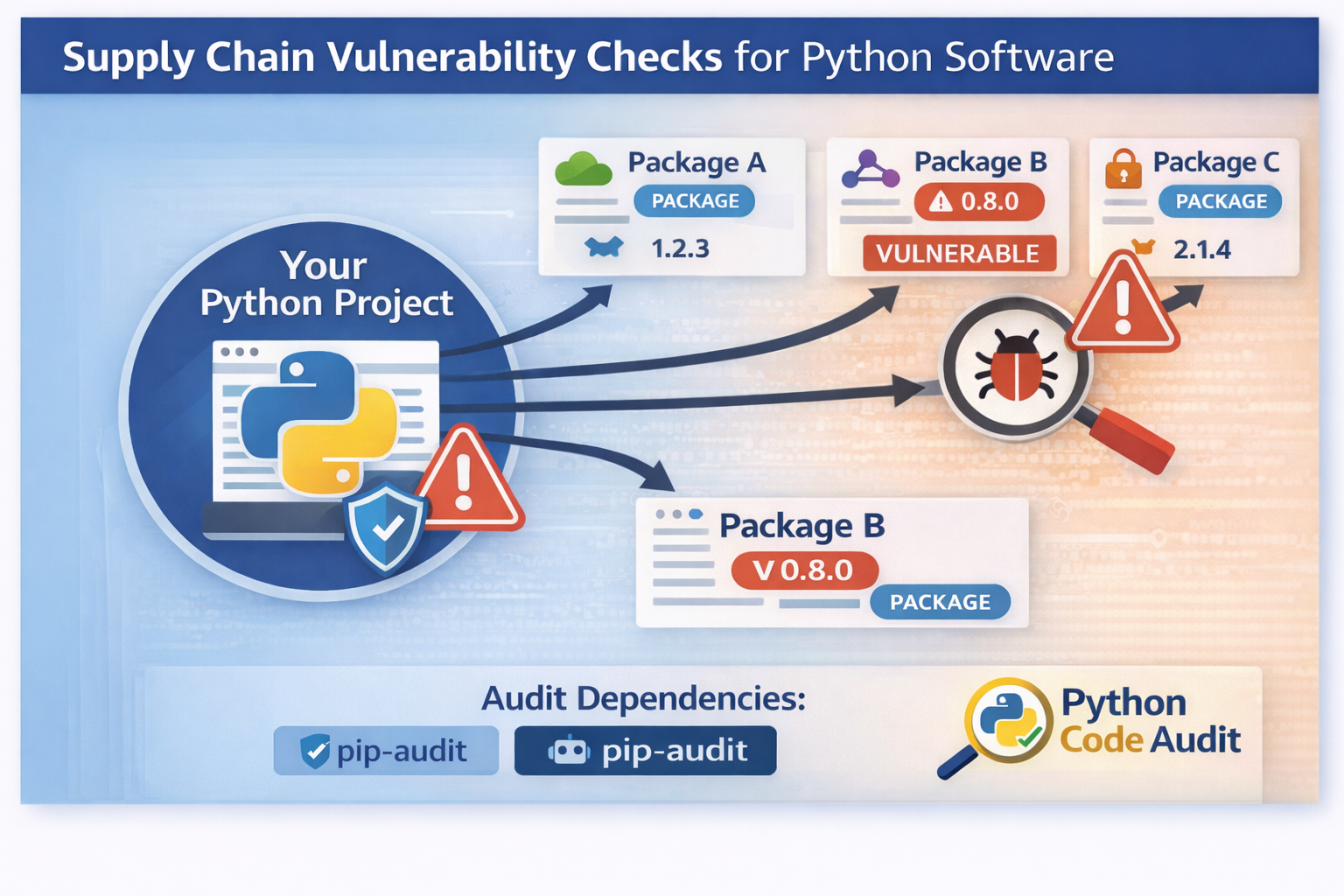
Supply Chain Vulnerability Checks (Dependencies) for Python Software:
Definition:
Supply chain vulnerability checks focus on identifying security risks in the third-party libraries and dependencies your Python software relies on. In Python, these are usually packages installed via tools like pip or listed in requirements.txt or pyproject.toml.
Why it matters:
Most Python applications use multiple external libraries.
A vulnerability in a single dependency can compromise the entire application, even if your own code is secure.
Attackers often target widely used libraries because this gives them access to many projects (“supply chain attacks”).
How it works:
Automated tools scan your project’s dependencies.
They check for known vulnerabilities reported in databases like PyPI advisories or the CVE (Common Vulnerabilities and Exposures) database.
They may also identify outdated packages that could introduce risk.
Examples:
Using an outdated version of
requestswith a known remote code execution vulnerability.A maliciously altered package in PyPI (e.g., a typosquatted package designed to inject malware).
Even if your Python code is perfect, your software is only as secure as the packages it depends on. Supply chain checks help ensure all dependencies are safe and up to date.
Secure design review
Use when:
Designing new features
Making architectural or implementation changes
Before major releases
Purpose:
Review design decisions and implementation choices
Often combined with SAST and human inspection
Best for:
Preventing structural security weaknesses
Security Architecture Review
A security architecture helps in the continuous process of optimizing and controlling your security risks.
Use when:
Designing or redesigning system architecture
Before major platform or infrastructure changes
During compliance or risk assessments
Purpose:
Evaluate overall system architecture
Assess deployment, operational context, and trust boundaries
Best for:
Ensuring systemic and long-term security resilience